Wednesday, July 22, 2015

Short Story - Rx

The first time he saw her was in Exam Room #2, sitting on the edge of one of the two chairs in that small boxy space, her legs thrust out in front of her crossed at the ankles, her hands clasped loosely in her lap, her shoulders hunched. She was peering straight ahead, yet even in profile, the intensity of the blue of her eyes caught his attention. He paused in the doorway to stare. They were the color of an October sky when the dust of autumn has finally settled and the air is clean and crisp. She was an older woman, but there was nothing withered or weak about her. His stare appeared to register with her, and she turned her head with deliberateness, stopping when her eyes locked on his. She didn’t speak, she didn’t have to. Her raised eyebrow and the cock of her head said: “Can I help you?” Supposedly, that was his question. He felt momentarily disoriented as he crossed the room to the other chair, which was at his desk. He tapped his fingers on it for a few seconds, but then sat down.

His day had been humdrum. He was beginning to feel more a factory worker than a doctor. An assembly line of aches and pains filled his days. It made him susceptible at this moment, open to play along, and he replied, “I don’t know. Can you?”

Her response came nonchalantly, “That depends. What’s the matter with you?”

He thought his answer would call her bluff. “Well my friends say I’ve gotten too serious, not much fun anymore.”

Instead, she laughed aloud. “You’ll be happy to hear that’s not terminal. There are lots of pills for that, or so I heard.”

He didn’t want to stop the repartee. It broke this increasing tedium of his days, something he’d not imagined about doctoring back in medical school. “What if I didn’t want to take a pill? What would you suggest?”

“Well, that’s the harder option. You'd actually have to do something.”

Her candor was refreshing.

“Like what?”

“Get to the root of things.”

“He paused. He wasn’t quite sure what she meant. You mean something like psychoanalysis?”

She rolled her eyes, a sardonic smile on her face.

 “No, more like a ditch digger. You pick up the shovel and you start to dig…into yourself.”

“What’s the difference?”

“Most everything.”

A tad unnerved by that response, he contemplated reasserting his control over the situation when she said, “I’ve spent decades being honest with myself. How long have you spent?” She dropped her head and looked at him sideways awaiting his answer.
The room was as still as a stifling summer’s afternoon. He felt her stare now as he studied his appointment book. He saw he had no more appointments for the day, no easy way to get out of this situation except lie. And he knew she’d know. He didn’t know how she’d know, but there was something about her he found both unsettling yet intriguing.  “I lie a lot.”

She nodded slowly, agreeing. “Most everyone does only they have a multitude of more respectable names for it. It’s boring, though, because it insures that nothing meaningful happens between the liar and the lie-ee.” She chucked at her newly invented word.

“How can you not lie?”

“You tell the truth.”

His voice gave away his impatience. It turned flat. No longer playful. “Surely you realize there are so many things people don’t want to hear.”

“That’s not the problem. It’s your discomfort at being unable to talk with them truthfully that actually bothers you.”

He felt uneasy. He didn’t know where this was going.

 She continued. “You see yourself as the one with the answers. Unfortunately in your line of work there far fewer answers than there are questions, and that’s where the lying begins.”

“So in order to be honest, I need to tell people I don’t know what their ailment is or I do but don’t know how to cure it and leave them with that?”

She felt the irritation in his reply, but ignored it.  “If you remember, I said, ‘Dig.’” Yours is a more taxing profession than say law, because in law, you can play with the ideas that have already been set down in case studies much like a chess game. It’s logical, open to reason and limited only by the need to adhere to black letter law. You, however, are in a field of endeavor that backs into infinity.”

She tucked her feet close to the chair, stretched up, leaned back against it and clasped her hands behind her head. Her red hair glowed in the soft settling light of the late afternoon as it streamed through a high set of windows to the west. Her unblinking stare rested on his face.

“So I suppose you are waiting for me to ask what you mean by being backed up against infinity.” His response was testy. He was ready to be done with this conversation. He had enjoyed its novelty, but it had gone too far.

“First tell me this, for it’s not like I have all the time in the world to spend with fools,” she said. “You’re annoyed. Do you know why?”

To finish story click here.


Wednesday, July 15, 2015

Interconnectedness is the Law of the Cosmos, Isn’t It


I’m not enamored with rubbing my face or anyone else’s in our less than thoughtful acts as human beings. This video, however, redeemed itself for me from its otherwise frightful message in this way. It demonstrates simply and graphically the consequences of our misunderstanding about how our world, and the universe in which it exists, operates. Every act of every human being upon this planet creates effect, the majority of which is usually unknown to us unless we have something like this video to capture even part of it. But here’s the enigma. On the one hand, as we see it, we are but dust motes in an infinite eye, yet on the other hand, every event of note through our history tracks back to the powerful endeavor of single individuals. How can we live effectively in a world in which we see ourselves and our acts as both inconsequential and of great consequence? What is the frame of reference that can accommodate that conundrum, the one that might allow us a view much more integrated than thinking only in terms of this or that.

I see only one myself. It’s a quantum step literally. It starts with an avid curiosity about and then a nurturing of the notion: Interconnectedness is the law – recognition that everything we do affects something or somebody somehow. It makes “the breeze off butterfly wings in Tokyo creating a typhoon for California”, a popular description of quantum effect, seem child-like up against this intricacy that can only boggle the mind of reason.

We can object to this concept of interconnectedness but then there are scenes like Midway Island, 2,000 miles from the nearest shore of any other country, to bring us back on point. And the underlying beauty as well as the ultimate irony is this:  to live from this cosmic law creates the very life that dreams are made from—whole, serene, satisfying, engaged and significant.
Rumi understood. Let him tell us:

Out beyond ideas of
wrong-doing and right-doing
there is a field.
I’ll meet you there.
When the soul lies down in that grass,
the world is too full to talk about.
Ideas, language, even the phrase,
each other
no longer make any sense.

We need to meet there more often.

With thanks to a dear friend, Ralph Miller, for once again exploring the net and sharing his finds with me. Much appreciated, Ralph.


Saturday, July 11, 2015

How ‘Bout Your Small Adventures

I have been fascinated most of my days to see the commonalities of life regardless of where or into which culture I peer. I guess as a young person I was fooled by the outward trappings of new and interesting places into believing those who lived amongst them would somehow experience life differently from me. Through spending a summer in Colombia as a 16-year-old, moving to the Canadian prairies, sitting on a stump speaking with a Cree Native about 21st century life for his people and asking a Vietnamese fellow traveler on a boat ride from Saigon to Vung Tau how he can be so civil toward Bert and me, I realized we are capable of relating to one another in a productive and meaningful way, regardless of those seeming differences. The deciding factor is our attitude – do we choose to rise above our differing beliefs and cultures to reach a common ground.

The beauty that is us, we as human beings, resides in us at a level I call reality. When we touch that place within ourselves, we rise beyond the petty, confining views we’re taught to use in looking at the world and begin to sense the nature of what connects us. When we open to the possibility of connection, our conversations, our associations change, and we behold one another in a way that lets us see through the superficial to what’s real. Those moments bathe us in such clarity that we cannot forget the richness of the experience; those memories are ours to treasure forever. I’m sure you too can remember moments where everything clicked, when you and someone else unexpectedly shared from that beauty, making you unafraid to just be yourself.

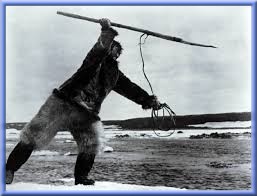
I was set on this course of reflection upon reading a poem from an unknown Inuit reviewing his life, one most of us would consider as radically different from our own. I wanted to say to him over time and distance, regardless of the worlds that separate us: I have
been where you have been. How good of you to remind me of this eternal connection we have with all things. The poem’s title was: “I Think Over Again my Small Adventures.”

I think over again my small adventures,
My fears,
Those small ones that seemed so big,
For all the vital things
I had to get and reach;

And yet there is only one great thing,
The only thing,
To live and see the great day that dawns
And the light that fills the world.

In the late ‘60s, I meet a teenage Inuit girl from Banks Island. If you look on a map, you’ll see that’s up near Santa Claus. I was fresh out of University and had lived on the US east coast all my life, so stories of her life fascinated me. Her people were still connected by their old ways, even though “civilization” had invaded their domain and called them into the 21st century. I can’t remember what I expected to hear from her as we wrote back and forth to each other, but aside from going to a theater to see a movie, something she’d only heard about, we talked about life as if we were sisters. I had taken cross-cultural training at that point in my life and had finally surrendered to the realization that our actions across cultures, our responses to overt acts could indeed be very different, even in primal relationships like mother to child. But I know now that that teacher had not spent enough time “sitting on stumps” to realize that when we dig deep enough, there is only one great thing we all share, the light that glows within us and around us, which we can all recognize due to the underlying fact of our inborn connection with one another and all things no matter who we are or where on this earth we abide. And then I further understood that it is not our seeming problems that create trouble among us, but rather the lack of honest desire to get clear about our nature - to see our adventures as they truly are.


Thursday, June 25, 2015

Beware the Barrenness of a Busy Life


Beware the barrenness of a busy life. Socrates noticed that a rather long time ago. He was the one who issued the warning. I wonder if people were as harassed back then scooting here and there, strained by commitments and buried in work. When you see movies of those times they appear to me as positively idle compared to this life we’ve created around us. But something had Socrates say that.

It struck me the other day as I labored away to answer letters that had piled up in the several months-long busy season our business creates twice a year. I had grimaced every time I looked at the stack, feeling the throes of commitments I’d made to a speedy reply. But strangely, every one of the 25 letters waiting on me started out the same way mine did… “I truly apologize for taking so long to answer. I have been so busy.”  Most of the letters were international, so it appears the busy life has somehow gotten to us all.

I do remember periods in my twenties where spare time was abundant. The major difference that I can see was that I had no computer (they didn’t exist then) and no TV. Instead of watching, I knitted, read, had compelling discussions with friends, sewed most of my clothing, took walks with no intended destination and made all manner of gifts for those I loved. It was a full life. It was not a busy life.

I read a curious article a week or so ago about the concern employers have presently over employees not taking their due time
off. I didn’t get to read to the end of the article to get the whole picture, because I was waiting for printed material in a store. When it was done, a perfect example of what I’ve been talking about, I jumped up and ran off to accomplish the next thing on my list. But the gist of the article was that we require the refreshment of time away and the occasional break or holiday to refurbish so many essential parts of being, and people have just not been doing that with increasing consequences to the workplace and home.

What is more worrisome is that we are now training up the youngsters of our culture to see the world as a race from point to point. When Bert and I work at day cares, the most common word spoken to children as their parents pick them up each afternoon is, “Hurry up, come on, let’s go, let’s go.” There is no languid hand-holding and quiet strolling to the car, delighting in one another’s company while sharing the events of each other’s day. Instead
little feet pound the floor trying to keep up, while heading on to the next event of the hour. I don’t think our youngest generation will carry any memories of lying in clover fields watching clouds float by or sprawled on a nighttime hill with their parents letting the marvel of the starry sky awe them. We will not be a better people for this lack. Wonder and awe feed us as much as meat and potatoes, only they feed what is deep within us, the place from which curiosity, creativity and intuitiveness bubble up like a forest spring. And such moments of rest and repose keep our hearts not just healthy but open and kind.

A few nights ago, Bert and I sat on the back step shelling peanuts. We didn’t talk. We just enjoyed the simple task, the closeness of one another, the song of a mocking bird in the dark that surrounded us and that life asked nothing of us but returned a sweetness that fills me still. Barrenness is for deserts not people, and I’m not sure busyness has much to offer for itself either.

Thursday, June 11, 2015

The Night the Moon Touched the Ground

        
It was just another ordinary fall evening. A friend had been visiting our farm having come up to give us a hand with some renovations before winter set it. She always enjoyed her stays with us, and we enjoyed her skillful carpentry and great company. Living as far north as we did, visitors from our former life down south were rare to non-existent. So Pearl’s 400 plus mile trek to our place in northern Alberta was more than appreciated.

While we kept on with hauling hay and combining grain in the face of fast approaching winter, Pearl refurbished the outside of the old house we lived in. It had been one of the first in the district we’d been told, the living room often used as a courtroom when local behavior deemed such decision making processes necessary. I still remember the first land tax notice we received. The home place acreage where the barn and house were located was worth less than a similarly sized parcel of crop land. I laughed and asked my mate if he thought the home actually lessened the value of that piece of land. It was serviceable but old indeed.

On the particular day in question, Pearl had finished a new set of stairs leading to the closed-in porch. She was testing them out, sitting on the top one having her afternoon coffee and cigarette. Since we didn’t smoke, she never smoked in our house. She was always respectful that way. I had just come in from hauling hay ready to start evening chores. I had a cow to milk, chickens to feed and sheep to bring close in for the coming night before we sat down to eat. The days were already shortening, so I hurried along to get chores done. A beautiful sunset was stretching out across this big sky country in shades of mauve and burnt orange and the air had a nip to it reminding me of what was soon to come.

When supper was over, Fred went out to his shop to work on some equipment repairs, I was separating cream and making butter and Pearl took her coffee out into the brisk evening to once again sit on her new stairs, relax and have a smoke. She had been out there about 20 minutes when all of a sudden, I heard the door open quickly and her whispering voice, tinged with alarm saying, “Christina, come out here – quick.” I was in the middle of washing the separator, but I stopped, and began to dry my hands on a tea towel. Her head poked in the door this time and she was even more insistent. “Hurry!” 

There was a definite look of fear in her eyes. I wiped any leftover water on my jeans and jumped into my wellingtons. I came out the door and turned to the east where she pointed. “What is that?” she asked, pointing perhaps 80 yards away toward the end of the barnyard. She was standing behind me as one does when they feel the need for protection. I was standing stock still in awe of what stood before me. 

“Pearl” I said over my shoulder, “what are you smoking?” Then I giggled.

She was in no mood for humor. “What is that?” She was dead serious.

“Pearl, that’s the moon.”

“No,” she countered.

“Yes it is.”

Before us sat a huge orange ball. It appeared to be two to three stories tall in diameter. It looked like it was sitting smack on the ground, as if you could walk right up to it and touch it. It was a sight I will remember the rest of my days.

I turned to Pearl who still looked a bit disbelieving and asked, “What did you think it was?”

“A UFO or something.”

I laughed softly and said something about damned city-slickers, and then I gave her a hug. We both laughed like young girls sharing yet another secret of life as we watched it all too quickly begin to seemingly shrink and rise.

I have felt since a child that the great tracts of nature are an ongoing gift to us humans. They stand just at the end of our lanes, just out beyond our back yards or in my case, at that time, just where civilization melts into wilderness; and there they are. In the words of Wallace Stegner:

“Something will have gone out of us as a people if we ever let the remaining wilderness be destroyed ... We simply need that wild country available to us, even if we never do more than drive to its edge and look in.”

And that wild country includes not just what is on the ground with us but the alluring, incalculable vastness of what also lies above us, especially on nights when it appears to have come for a visit.

Here’s what one such “moon visit” looked like in Wellington, New Zealand. Do take a peek.


Monday, May 25, 2015

Christina Carson Blogging: The World is not an Easy Place

Christina Carson Blogging: The World is not an Easy Place: Several Christmases ago, I received one of those gifts that keeps on giving – a full set of Mary Oliver’s works. I still haven’t read the...

Sunday, May 24, 2015

The World is not an Easy Place

Several Christmases ago, I received one of those gifts that keeps on giving – a full set of Mary Oliver’s works. I still haven’t read them all. That means only there are treasures on the shelf just waiting for me to take them down and be newly awed and inspired. Today, I reached for The Truro Bear and Other Adventures. Not one essay and eleven poems in, Miss Mary caught me again. The poem was entitled “Turtle,” the story line being Ms. Oliver watching the inevitable as a turtle follows a line of soft, new brown teal chicks following their mum around a pond’s edge, while mother duck attempts to get them across the water without harm. When the inevitable becomes reality, Ms. Oliver has this to say:

…my heart will be most mournful
on their account, but listen.
What’s important?
Nothing’s important
except that the great and cruel mystery of the world,
of which this is a part,
not be denied.

Ms. Oliver has grown most wise in her years dedicated to
observing and understanding nature—both that of human beings and the natural world. And her vast talent lets her reveal it on a razor’s edge of poetry which can separate the painful from the poignant without nicking either.

It is a more recent development in my life, this willingness to let the world be, to drop the need to slather everything with meaning such that what lies beneath is used to support my momentary needs rather than disclose its inspired truths. The mystery asks only that we remain open-hearted, and invariably, if we’re willing, it reveals how we can live fulfilled in our day-to-day struggle in a world seemingly more cruel than great. 

The end of Ms. Oliver’s story has her finding on a city street in summer:
… a dusty, fouled turtle plodding along—
a snapper—.

She then says she knew what she had to do.

I looked it right in the eyes, and I caught it—
I put it, like a small mountain range,
into a knapsack, and I took it out
of the city, and I let it
down into the dark pond,
into the cool water,
and the light of the lilies,
to live.

That’s the part of the mystery that’s fascinates me the most, noting its subtle, silent resolutions, the unimagined calm that always, I mean always, follows, even in the face of our most distressing struggles. And amazingly, whether we understand or not, we are included in its sweet, enduring comfort.

The world is not always an easy place, but it is never without wonder and, sooner or later, grace.