Monday, July 4, 2016

Meeting with an old Friend

It happened as I sat in a friend’s car waiting for her to return, this unexpected meeting with an old friend. A brightly colored little
book in that catch-all place beneath the dash caught my eye. When I picked it up, I recognized it immediately. Holding it in my hands made it feel like I had just slipped my arm through an old friend’s and we pulled each other near for a moment, laughing, joyful at this chance meeting. Anthony De Mello, that disruptive Jesuit priest, East Indian born to Italian parents was in my life again.

He started out as so devout a Catholic that some of his brethren felt he was behind in his studies into other religions, and so it went until the day Tony had an experience that, in his own words, revolutionized his life. He met a rickshaw driver in Calcutta who was dying of a painful disease. The man was so poor that he had had to sell his skeleton before he died, and yet the man was filled with interior joy.

Tony said, “I realized I was in the presence of a mystic who had rediscovered life. He was alive; I was dead. He was a man who had reincarnated himself during this life.”

With the fierceness of someone who had seen an actuality he
otherwise would not have believed, Anthony De Mello wanted to know more and began to peer into life deeply. What was it that stood between him and that old man? What is it that we do not understand about ourselves that holds us in such small, petty and fearful lives?

As he began to interpret the Christian scriptures through the eyes of the East, more and more people  listened, and Tony’s awareness expanded in a way that opened him to greater understanding. J. Francis Stroud, S.J., who wrote the introduction to the book, The Way to Love, the one I took from under the dash that day, was attracted to Tony’s work when he heard that Tony gave a retreat to sixty fellow Jesuits and spoke to them six hours a day for eight days. J. Francis  remembered saying, “No Jesuit listens to another Jesuit six hours a day for eight days.” And his thought followed, especially some of the Jesuits at that meeting. And so J. Francis was drawn to attend a retreat himself, and his life too moved in a new direction.

Needless to say, Tony did not garner encouragement or praise from the Vatican. In fact, every time we’d hear that De Mello was in Rome, my husband would say, “Sounds like the Pope put De Mello in time-out again.”

By his end, which came suddenly and all too early while remaining for many  under a cloud of doubt as to exactly how he died, Anthony De Mello had probed the depths of human mental conditioning, the programs that hold us in the way of life we know so well. He saw what we must do to free ourselves from this conditioning and then he did it for himself and instructed others as to what he knew.

He wrote his last meditations, The Way to Love, as a Zen-like,
take no prisoners view of what is real and what it not. Taking thirty-one bits of scripture from the Bible, he explains them, from his Eastern orientation, and offers an interpretation which demonstrates how the Bible, like all other great works of esoteric knowledge, spoke to this mental conditioning, this programming that holds us from knowing what in truth we are. It is quite possible you have never heard the Bible explained in this way. 

          Anthony De Mello makes a fine friend. I encourage you to meet him. See what you think. He also makes this seeming outrageous statement:
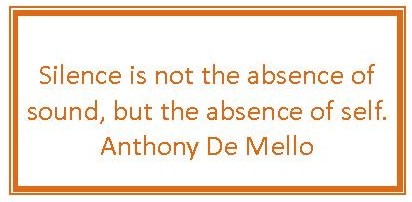
“There is not a single moment in your life when you do not have everything you need to be happy.”

Absurd?  Shocking? Or Intriguing?  
The Way to Love may help you answer that.

Christina Carson, author


Saturday, June 25, 2016

Calling All Garrison Keillor Fans

I was attracted to the front page headline in the Arts & Leisure
section of the Times this week: “The Garrison Keillor You Never Knew.”  As I wondered what this news story might be about, a not altogether endearing habit of mine—attempting to answer the question or solve the riddle rather than just reading the article—I realized this article was about something I didn’t want to hear. Garrison Keillor, the father of modern public radio programming through his production, Prairie Home Companion and the endearing, whimsical record of life in the Midwest, his tales from the fictitious Lake Wobegon, is calling it quits. His last show of Prairie Home Companion will be July 1 in, of all places, The Hollywood Bowl.

So what’s the big deal? For me, the real loss is in not hearing Keillor read from one of the most poignant yet funny catalogs of American life I’ve ever heard; tales from Lake Wobegon — the rich portrayal of this country’s heartland back when America felt like it was becoming aware of itself. Like a child growing up, it was as if this country sensed a life, a scene and a tale it needed to tell. Keillor told those stories. Interestingly, the article claimed that Keillor’s stories were not attempts at self-expression, meaning they weren’t his stories, but strictly from his imagination. Mind you, the writer cannot remove his take on those stories. We are all tied into perceptions, which unless we’ve worked a lifetime to remove ourselves from, are going to color the thoughts we put on a page.

 But either way, the stories managed to portray the mid-west, that bastion of Americanism, in a way most could relate to and love. I didn’t even share that idyll, but still, these stories, written with unflagging honesty and yet no judgment, made it possible for someone as jaded as I was with American life, to just plain love the uncomplicated, forthright nature of the people Keillor introduced me to.

And yes, we people in our 70th decade grew up in the '50s, in retrospect a time not only of cold-war terror but also a people’s awe with a life moving away from the isolation and drudge of rural existence into the seeming magic of town living with the parallel awakening of home-based technological wonders. We may laugh at the naïve and child-like enthusiasm that our parents met this age with, but those snickers from these seeming more sophisticated times, I sense are laced with a tad of longing, a desire to be released from all the cynicism and chaos our lives now exhibit.

One of my favorite stories was entitled “Storm Home” told in retrospect by a man who as a child lived on a farm, but went to school in town. Such children were assigned a storm home, a family that would take them in during times when a snow storm blew in during the day, making it impossible for those children to get home. The storyteller in this case never got to use his storm home as no such emergency ever occurred during his school years. But that didn’t stop him from imagining a family that, of course, had none of the insensitivity of his own or the strict rules and lack of appreciation. His storm home family laughed a lot and loved him dearly and thrilled to his daily return. In his mind, they filled every wanting space in his life, and as winter began to close in each year, his deep longing to end up in his storm home ruled his days. Keillor, this most elusive, introverted and undemonstrative of individuals, picks his way through the lives of others, missing neither the irony of the stories nor the characters’ longings, yet tells their most tender secrets with a level of tolerance and respect that digs deep into the reader’s heart.

Keillor has plans that will keep his writing in front of his fans. A Washington Post column, a screen play and further books are on his To Do list. The idiosyncratic beginnings he brought to public radio made room for other unusual and addictive shows like Car Talk and This American Life. We have him to thank for that. He suffered no fools, and he captured a period of life in this country that we will never see again. A time when so much was new and fresh and buoyant.

We may never really know Garrison, but in this time of naked exposure on so many levels, I say hats off to Keillor’s seeming intent to keep it that way.

If you are still talking to your home-based children in this digital era, read them some tales from Lake Wobegon and see if you can’t instill in them the wonder and delight offered by an era they may not even be able to imagine anymore.

Christina Carson, author


Tuesday, June 14, 2016

Not Time but Rhythm

It all started this morning when I looked at an ad in the New York Times Style Magazine that comes with the Sunday New York Times. The ad showed a watch, the face of which was made to look like anything but a watch. It was an interesting piece of jewelry, but what caught my attention was how well we’ve been trained to know the time. It took only the position of the “hands” on that strange surface for one to know it was a watch and what time it showed. My next thought was time isn’t real, for I realized I had been trained to understand the meaning of a clock face no matter how bizarre the time piece may look. Time is a learned phenomenon, not a reality.

As I traveled further in that magazine that oft times makes me feel like a babe in the woods as it takes me through the glitz and eccentricity of the New York style scene, I stopped on page 76. A striking and definitely real landscape, which covered two pages,
claimed to be a re-created garden on rocky, dusty patch of north Moroccan coast– the creation of Umberto Pasti, an Italian writer and horticulturist. He had taken this arid, burnt out clay acreage which harbored only three old fig trees, a clutch of pomegranates and one eucalyptus and over eighteen years and hundreds of helpers return it to the idyll it may have been in ancient times. The vision for it, he claims, occurred when he fell asleep under one of those old trees, his dreams organized by the power of the local jinn, as the region’s legends go. So who’s to argue?

The garden feels like magic, the uncanny sense one gets when something exists between unfettered wilderness and organization. It does not look or feel man-made for the greater part but more feral or marginally tamed. It haunted me. But what it showed me was how it is not time we want but rhythm, for that is what I felt as I looked at Pasti’s creation. The rhythm is what I loved when I lived on the land for many years, guided only by the cycles of light and dark, warmth and cold, life and death and wet and dry. Those were the elements that organized my life. There was a comfort to it like when you fold yourself up against someone you love or feel the release of a deep and comforting sigh.


Rhythms, especially natural ones, encourage us to recall we belong here too and invite us to bring our own beauty and
mystique. That recollection tempers our actions toward life around us, human, plant and animal. But to live in the naturalness of the world, we must be creatures of rhythm not creatures of time. Look to see where you can take bits of time out of your life, then let the pulse and sway of life itself have its way with you. And if you already have, share one of those moments with us.


Friday, June 10, 2016

A Tribute to the True Beauty of Womankind

Sometimes we come across a story which stuns us through its depiction of one person’s unusual choice in the midst of great trauma. Jill Kelly is one of those people, a lady who took on the world’s notion of what defines beauty in a woman and rewrote it. When life dealt her a hand that immediately began to steal her
sense of worth and attractiveness, Jill stood tall. As she took ground, she realized how deeply she wanted to share what she was discovering. And so began this unforgettable story.

I became aware of this chronicle from a photographer friend of mine, Adrienne Wall, who studied the work of the world renowned photographer Sue Bryce. Over the last year or so, Adrienne has kept tabs on Sue and recently sent me a link to Sue’s website where I came across this account. I’m passing it on to all of us – women and men. Jill’s choice made room for us all.

For nearly 26 years, Sue Bryce’s work has centered on capturing the true beauty of women and reflecting it back to them in her photographic endeavors. Her work is masterful and original, and yet when Sue met Jill Kelly and heard her narrative, Sue realized this woman had much to teach her that she had not yet learned about the nature of true beauty which women harbor.

Women have always had a tough go of it when it comes to the standard society has determined as to what constitutes acceptable beauty in women. And most difficult of all are those times and circumstances that place a woman seemingly irreparably beyond any chance of coming close to that standard. Jill Kelly had such an experience and yet regained a sense of beauty in spite of the ravages of cancer. Rather than merely talk about how she triumphed, she allowed Sue Bryce to fashion a photographic exposé of her response to life as a young woman when the standard said she no longer “qualified” in mind and body to consider herself beautiful. I believe if you take a few moments to watch this video, she’ll convince you too that the true beauty of womankind radiates from within, from the light that fills our eyes, to the love that flows through our hearts and the way we so generously turn toward sharing with others. I believe you’ll feel yourself able, if only for a moment, to see beauty not only where it is easy but also in the more challenging photographic moments Sue Bryce captures. Jill’s husband found his way as well, thanks to Jill’s choice. He made a space for her, and she created magic in it. As Kahlil Gibran promised: Beauty is the light in the heart.

Click here and scroll down to The Light that Shines.
The video is to the right.


Wednesday, April 13, 2016

We Have to Talk

It’s a well know statement we’ve all heard. In fact, a male friend of years past once told me, in the world of men and women, the four words that most strike terror in the hearts of men are: We have to talk. Maybe this conversation will create discomfort in you or maybe inspire your curiosity. But either way, we have to talk.

Talking is what we humans do. Yes, first we think,…usually, but that is just a form of inner talk, and for some reason, we equate our capacity to express in words with deserving superior station on this earth.  Me, I’m more impressed with the fact that whales can communicate across oceans. But like you, what I have are words. And like you, I can build empires with them or crush spirits, inspire minds or talk trash, baby talk my dog or self-talk to me about my shortcoming or whisper words of love to my suffering heart. But what we need to understand is that those words came with meanings, prepackaged, ready-made interpretations, which we mold into beliefs. And what do we do next?  We believe them. We swear they are true: That bum ruined my life; If I just had enough money, I could be happy too; She’s an idiot; He stole my heart.

  From the insightful Herman Hesse in Klein and Wagner:
Mind invented contradictions, invented names; it called some things beautiful, some ugly, some good, some bad. One part of life was called love, another murder. How young, foolish, comical this mind was. One of its inventions was time. A subtle invention, a refined instrument for torturing the self even more keenly and making the world multiplex and difficult.

Do you ever find yourself envying your cat or dog in their all too sane approach to life? A life where they live and breathe in this very moment? They are not making forays into a mind full of stories about yesteryear or fantasies they wish for tomorrow. What happens to us in the moment where our dog’s tail bangs the floor in welcome or our cat shows us what serendipitous play looks like. What usually happens is we sit there instead talking to ourselves, and doing it so believably that we entangle ourselves in seeming appropriate emotions even though nothing…is…actually….happening to us. And we’re the supposed intelligent ones? Here’s where we shyly laugh at ourselves and thank our dog or cat for not telling on us.

The saddest part of it all, for me, is that we no longer have elders, no longer have insight and wisdom gleaned through the ages that someone protects and brings forward to each new generation. They would have taught us about what’s real versus what we’re making up. Instead, all we have left, outside our ridiculous beliefs, are a few precious books and a smattering of humans who have worked all their lives attempting to remember that we are much more than talking creatures. We are creatures whose perceptions actually create life as we experience it.  We are creators of a startling order who don’t realize that the majority of each day’s experience is a product of our minds, rather than actual interaction with the world around us. I have no idea why this seeming miserable trick has been played on us, but we are not without resources. It’s just that we must get serious about untangling things so we can get straight whose life it is we’re living.

 In my Morning Pages I put it this way:
“We the wordsmiths,
we the lover of language and meanings,
midwives birthing our stories and poems,
sensible enough to know fiction from non-fiction….in our trade,
yet totally bamboozled by our own lives.
Living as if we’d somehow escape
the consequences of made-up names and meanings,
of inventions that exist only in our minds,
while all of Nature chuckles kindly,
its voice, though barely audible, whispering
genre, genre, you’ve mistaken your life’s genre.”

But take heart. For as the great sage Kabir said: “When the Guest (your inner awareness) is being searched for, it is the intensity of the longing for the Guest that does all the work.”
Want it that badly, then let’s see what we talk about then.
  
If you would like to see how we talk about relationship,
If you’re curious about a new way to talk about health and well-being,
 read Dying to Know.
If you are doubtful life could be lived any other way,
let Miss Imogene Ware, in the profound love story, Accidents of Birth,
show you what that looks like.

Novels by Christina Carson on Amazon


Thursday, February 25, 2016

Let’s Not Be So Certain

Sometimes a person will grab a glimpse of life which in its commonness and obviousness stuns us. And wouldn’t you know, it’s usually a poet, god bless them. Those creatures of vision that manage to catch an unexpected edge of life, suggesting we not be so certain about what we think we know. Marie Howe, in her poem, ‘What the Living Do’ written in tribute to her brother, Johnny, who died a few years prior of Aids, turns the drear of the ordinary into a moment of unanticipated infatuation:

Johnny, the kitchen sink has been clogged for days, some
utensil probably fell down there.
And the Drano won’t work but smells dangerous, and the
crusty dishes have piled up waiting for the plumber I still haven’t called.
This is the everyday we spoke of.

It’s winter again: the sky’s a deep, headstrong blue, and the
sunlight pours through the open living-room windows
because the heat’s on too high in here and I can’t turn it off.

For weeks now, driving, or dropping a bag of groceries in the
street, the bag breaking, I’ve been thinking:
This is what the living do. And yesterday,
hurrying along those wobbly bricks in the Cambridge sidewalk,
spilling my coffee down my wrist and sleeve,
I thought it again, and again later, when buying a hairbrush:
This is it. Parking. Slamming the car door shut in the cold.
What you called that yearning. What you finally gave up.

We want the spring to come and the
winter to pass. We want
whoever to call or not call, a letter, a kiss—we want more and
more and then more of it.

But there are moments, walking, when I catch a glimpse of
myself in the window glass,
say, the window of the corner video store, and I’m gripped by a
cherishing so deep for my own blowing hair, chapped face,
and unbuttoned coat that I’m speechless:
I am living. I remember you.


It is all too easy to believe we know winter because we’ve seen it for years or that boredom is an appropriate response to day-in, day-out life, or that being in love is time limited or that dreams are for people under 50. We’re comfortable defending inertia’s downward drag, convinced of the impossibility of undoing habits and willing to defend stability over serendipity. Marie Howe would have us remember how it is that against the backdrop of the seeming ordinary the extraordinary can be most easily noticed. So who’s to say in a universe as relative as ours what we should disdain and what we should hallow. For in one short, illuminating moment, say when we wake to the harbingers of spring, robins, standing in fresh January snow, singing for all their worth, we could have our dull yet comfortable certainties shattered by the enchantment of the unfathomable.

Wednesday, February 10, 2016

Details Details Details

For writers and readers, the devil is not in the details, the world is. For far too long I have allowed myself to believe something I heard repeatedly but never questioned; that being, too many details in writing was the mark of an amateur. They just weren’t needed. They killed the story I was told. They were boring, just a fill factor. What a surprise I had when I read Chapter Three - Details, Details in Alice LaPlante’s classic: The Making of a Story.

An unexamined belief is a guarantee of limitation. The notions we accept without investigating are invariably those that trip us up and hold us back. I accepted that details were something that should be avoided, stick to the big picture I was told and then march your characters into that and hope the reader makes that often serpentine journey with you. But now I see how where you start each story is so significant. Do you start with the big picture – the noble truths, the campaign, the issue that drives the story and move to the specifics or do you begin with the specifics and then expand? If you do the latter, details are your major tools.

So do we write:
With the beginning of World War II, Jeffrey Tomes, who had always wanted to be a soldier, was secretly celebrating that his dream was about to come true.

Or do we write:
Jeffery was curled in a half circle on his bed completely absorbed in a comic book he’d found as part of someone’s weekly garbage set out in an alley he used as a short cut to school. When he spotted a comic book on the top, he dug feverishly through the box, rationalizing his lateness for school against the prospect of finding one of his favorites. Three-quarters of the way down, there it was. A Soldier of Fortune comic. What a find. Now on his bed, he licked the  index finger on his left hand and stuck it on the page corner insuring it turned without hesitation. For once the story started to roll out, Jeffrey wanted nothing to stop it.

From the details, emerge the story. From the details, emerge the characters. The details, like an old Biblical genealogy, beget images and images deftly rendered beget familiarity and familiarity is how a reader inserts himself into the developing story and brings with him a palette of emotions that assures reality. The writer’s role is to get that process started with every ounce of creativity he or she can engender.

But the message didn’t hit with its full punch until LaPlante offered a writing exercise from John Gardner’s, The Art of Fiction. Here is that writing exercise for you to experience first-hand what stands revealed when you are forced to use only detail to create an image which in its own way tells the story of a particular moment. Give it go. Here are the instructions:

Describe a barn as seen by a man whose son has just been killed in a war. Do not mention the son, or war or death. Do not mention the man who does the seeing. The result should be a powerful and disturbing image, a faithful description of some apparently real barn, but one from which the reader gets a sense of the father’s emotion; though exactly what that emotion is he may not be able to pin down.

If you are a writer, this exercise is definitely worth your time and effort, for if your experience is anything like mine, you will feel like you have learned something that you could never quite put your finger on before - what it is that master novelists are doing in their writing that makes it so compelling.

If you would like to read my attempt at this exercise, click here.